Actor, writer, director, and environmental advocate Nat Boltt has long been a dynamic creative force across film, television, and theatre. A multifaceted creative force, her work not only spans form and genres, but continents too. Known for her sharp, memorable performances
Nat Boltt has long been a dynamic creative force across film, television, and theatre as a multifaceted creative force: an actor, writer, director, and environmental advocate whose work not only spans genres, but continents too. Known for her sharp, memorable performances, Boltt has steadily carved out a space for herself both in front and behind the camera. Over the past decade, she has grown her focus as a storyteller, developing a body of work shaped by humour, heart, and a deep curiosity about the inner worlds of her characters.
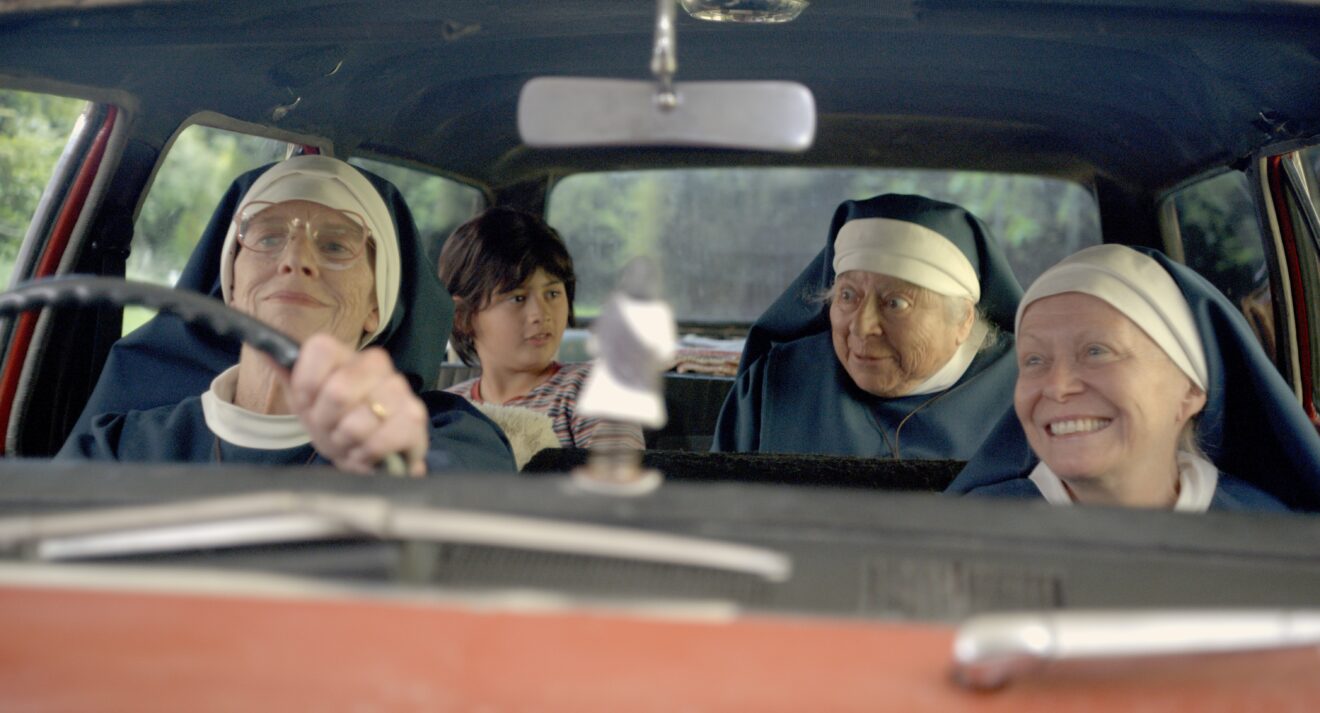
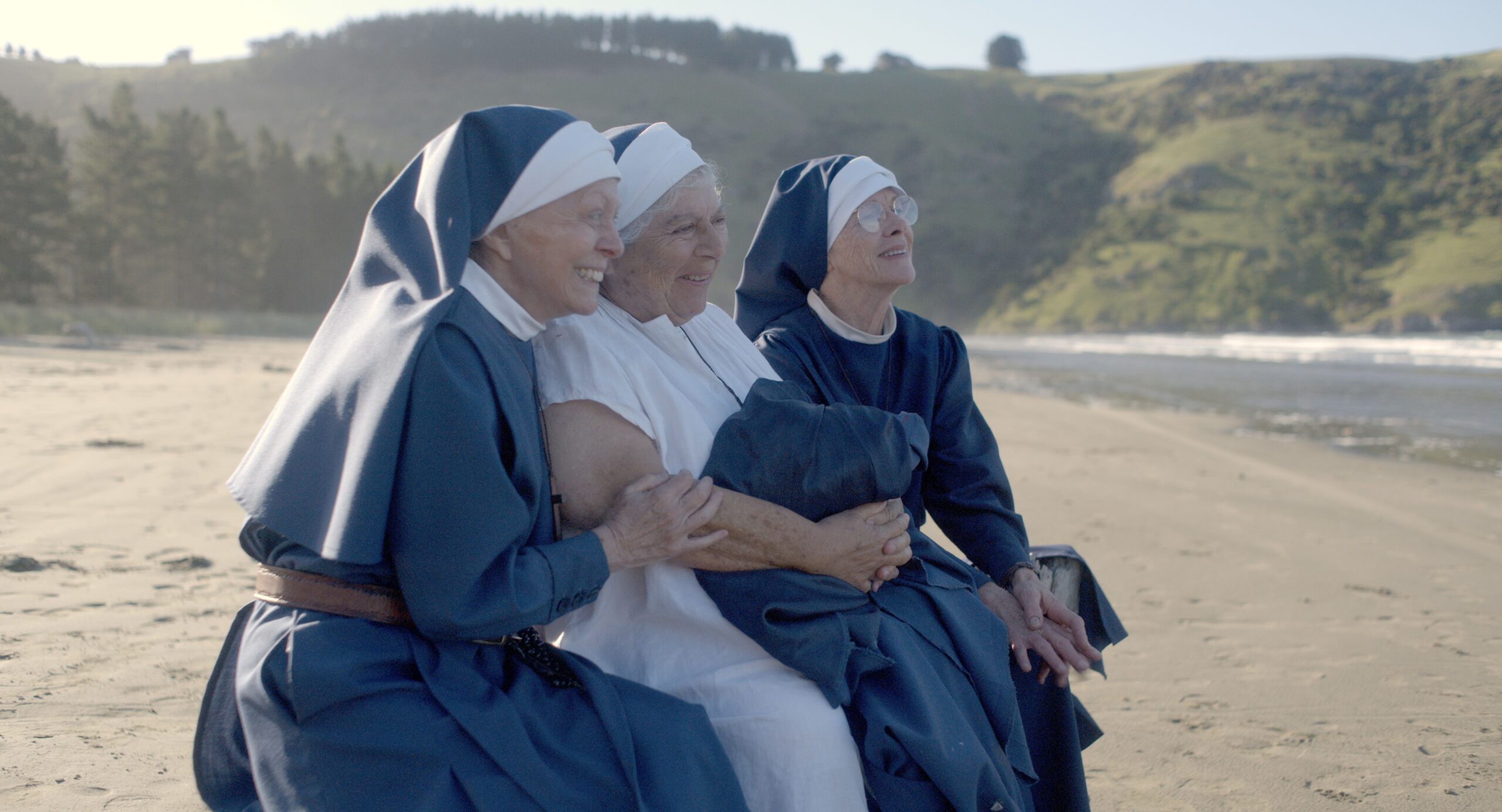
With HOLY DAYS, Boltt makes her feature directorial debut, adapting Dame Joy Cowley’s novel for the screen with a vivid blend of humour, spirituality, and emotional depth. Set against the sweeping landscapes of New Zealand’s South Island, the film follows young Brian as he navigates grief, belief, and an unlikely bond with a trio of eccentric, big‑hearted nuns played by a powerhouse trio of Judy Davis, Miriam Margolyes, and Jacki Weaver. The project unites Canadian and New Zealand creative teams, foregrounds meaningful collaboration with Māori cultural advisors, and brings Boltt’s personal values around sustainability and community stewardship directly into the filmmaking process. Early acclaim from TIFF Industry Selects and the Santa Barbara International Film Festival, sold-out local screenings at the Victoria Film Festival, combined with a strong box‑office debut in New Zealand, has positioned HOLY DAYS as a breakout film: warm, mischievous, visually arresting, and profound.
Nat Boltt spoke with us about the challenges of adaptation, the joy of working with three legendary actors, and the spiritual and cultural care that shaped the production from its earliest days. She shares how comedy became a vital counterweight to the story’s themes of loss; how an unexpected snowfall found its way into the film; how cross‑border producing opened creative possibilities; and why she believes that positive, hopeful stories matter now more than ever.
Still from HOLY DAYS.
Congratulations on your feature directorial debut! What drew you to Dame Joy Cowley’s novel as the source material for HOLY DAYS, and which elements of the story did you feel were essential to preserve on screen?
I have always found Joy to be a very fascinating person. I met her on The Silk, my first short film, which deals with mortality and what happens when we pass. Where do we go? Don’t we all want to know? I then discovered that Joy had had a near death experience—she describes it in her memoirs. She carries this message into her novel, Holy Days, and I really wanted to explore that—to give people, especially children, a way of coping with loss and grief. I maintained the love of the nuns (Agnes, Mary Clare and Luke, played by Judy Davis, Jacki Weaver and Miriam Margolyes) that protects and guides young Brian (Elijah Tamati).
What I changed a bit is the tone of the book. I added a lot more comedy. I felt it really important to preserve the beauty of the New Zealand culture that are described, as well as the culture of the summer holiday road trip. That is such a classic adventure, that I think many people around the world have on their bucket list. But mostly, I wanted to preserve the sweetness of Brian—the way he talks, the way he sees the world, his innocence. Joy is globally renowned for her love of children and I wanted to get this across in the film. I also just loved that this oddball group ends up as incredibly close friends (like in LITLLE MISS SUNSHINE) the characters all learn from each other, regardless of age, belief, gender or background.
Judy Davis, Miriam Margolyes, and Jacki Weaver form an extraordinary trio of award‑winning icons. What was your experience directing them, and how did their chemistry help shape the film’s tone?
It was great fun! Challenging at times, only because I had to be top of my game because they are all top of theirs, but they were always ready, always word perfect and certainly open to direction. Judy, Jacki and Miriam are all so different, just like their characters. One is strong and direct, the other gentle and playful and then there’s Miriam, hilarious and unpredictable. But all three are brilliant in their own right and total professionals. They have such different methods, and each absolutely works. I have worked with many ‘big names’ as an actor, but I found these three legends to be very amenable and very supportive. We had such a tight schedule and very young lead actor, so we all knew we had to work together to get the film made.
The local New Zealand actors, who are stars in their own right, were quite wonderful and brought the classic ‘can-do’ attitude to the table in support of the international actors.
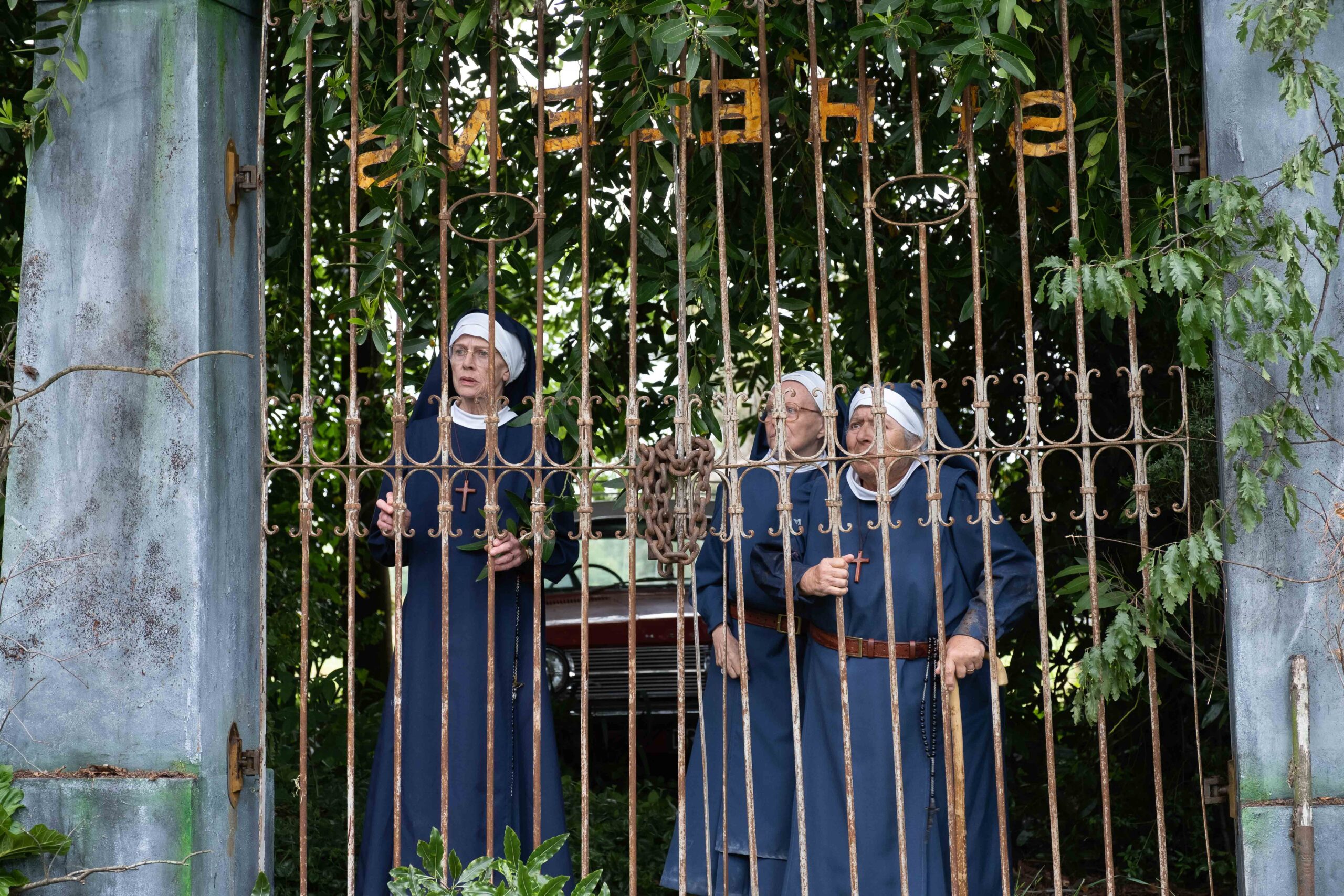
Still from HOLY DAYS.
HOLY DAYS was filmed across New Zealand’s South Island, with snowy mountain settings and unpredictable weather. What were the biggest on‑location challenges you and the crew faced, and did any “happy accidents” make it into the film?
In the film, there is a cold snap that brings snow to the Southern Alps in the middle of summer. This actually happened during our pre production! We were on a remarkable journey with the Māori elders of that area, who were taking us to see Mount Cook/Aoraki, their ancestral mountain, to give us their blessing to film it. It was such a special time. Then, on the drive home, surrounded by unseasonal snow, Aoraki peaked between the clouds and I filmed it. We use that shot during Brian’s journey home, when he’s looking out of the car window, remembering his mother. It still gives me goosebumps thinking how intimately and timelessly everything connected that day, and that we get to relive that moment in HOLY DAYS.
The film brought together creative and production partners from both Canada and New Zealand. What did this cross‑border collaboration make possible for you and your team?
It was an intricate collaboration that allowed a sharing of skills and resources as well global support of the story and its message. We were very lucky to be able to access tax rebates and funding on a federal and provincial level in both countries. Financing an independent feature film is never easy, especially with the risk aversion from investors these days. We likely wouldn’t have been able to make HOLY DAYS without a co-production. The exchange rate helped us, so shooting in New Zealand was an added bonus. We were also helped by Koāwa Studios at Canterbury University, who gave us access to their facility as part of a student-training program.
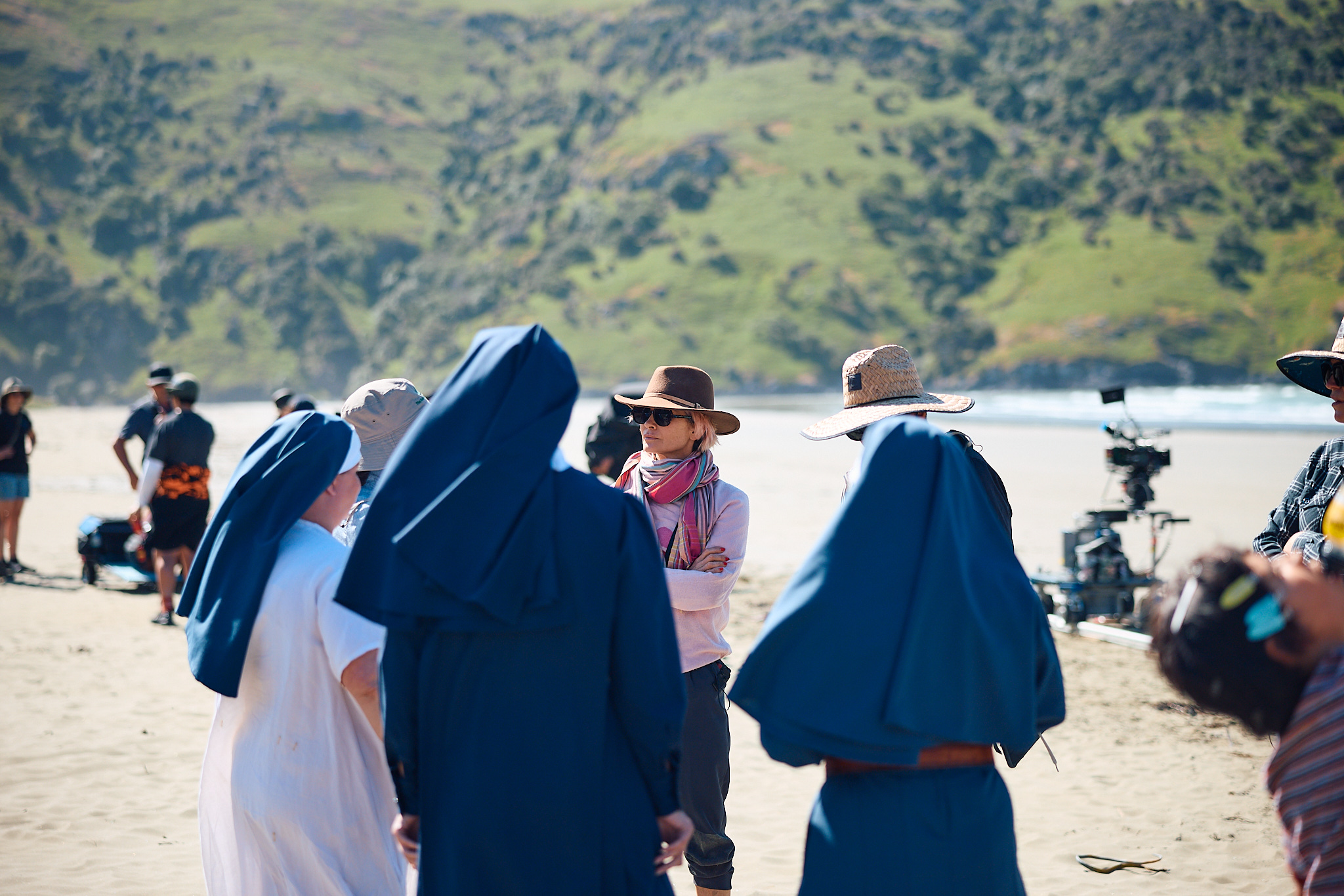
Nat Boltt on the set of HOLY DAYS.
You’re a longtime environmental and animal‑rights advocate. Did your sustainability values influence how HOLY DAYS was produced, especially given your involvement in industry sustainability initiatives?
Yes, I absolutely encouraged the producers and production to be as sustainable as possible. I am part of the DGC Sustainability Committee and have hosted the Sustainable Production Forum here in B.C. So, while shooting in and around Christchurch, I asked for everyone to focus on reusable crockery, cutlery, beverage containers, as well as paperless production—favouring digital scripts and sides etc. Because it was such a tight budget, there was minimal irresponsible ‘Hollywood’ handling of resources already. The boom swinger had a small farm and took excess food or food scraps home for his pigs! But where I found the system failed was when I saw the separated trash (recycling, compost and landfill items) all being thrown into black trash bags at the end of the day. When I asked why, I was told that Christchurch doesn’t actually have the facilities to process recycling. I found this incredibly frustrating and disappointing. New Zealand still coasts along on this ‘clean, greeen, pristine’ reputation that really isn’t true. Here in B.C. Canada, we are world leaders in carbon neutral and sustainable production and I’m not surprised other countries reach out to us, asking how to achieve what we do. I’m so proud of everyone at DGC Green, Reel Green and Green Spark Group who are really educating and encouraging government and industry to support our initiatives, and to protect the environment that sustains us. (btw We need more help!)
Brian’s journey is deeply rooted in place and culture. How did you collaborate with Māori creatives and cultural advisors to ensure authenticity and care throughout the entire production process?
That was a wonderful journey of its own! Our Māori cultural producers, Tainui Stephens, Micah Winiata and producer Roxi Bull, guided every decision, from the filming of Aoraki, Brian’s ancestral mountain, to the language, the use of cultural clothing and even the traditional Māori wind instruments in the sound track. I was given the gift of a once-in-a-lifetime experience of a noho marae, an immersive cultural experience at the sacred meeting ground. I visited with the elders, who shared stories, food and guidelines for kaitiakitanga, the role of being a guardian of the environment. That weekend, we visited Aoraki (Mount Cook) and had the incredible snowfall that I mentioned earlier.
One of those elders, Te Wera, is in fact, a thespian and appears in the film, along with Tainu, as the fishermen on the ferry. This blessing from the Ngai Tahu iwi, was then carried forward to every location. Micah would perform a karakia, a prayer to acknowledge the ancestors and bring people into a state of unity. It’s something I have always loved about New Zealand film and TV sets: the respect paid to those who came before us and the expression of gratitude to be able to make use of this place to tell our stories. I honestly believe that every production should do this. Every New Zealand production that has followed this beautiful process, in my experience, has gone well. It takes ego out of the picture and helps people get along and get the job done. It really is a blessing. We didn’t have a single day to spare if anything went wrong on HOLY DAYS, because we wrapped right before Christmas. We had no major weather days, no illness or mishaps. It was miraculous.
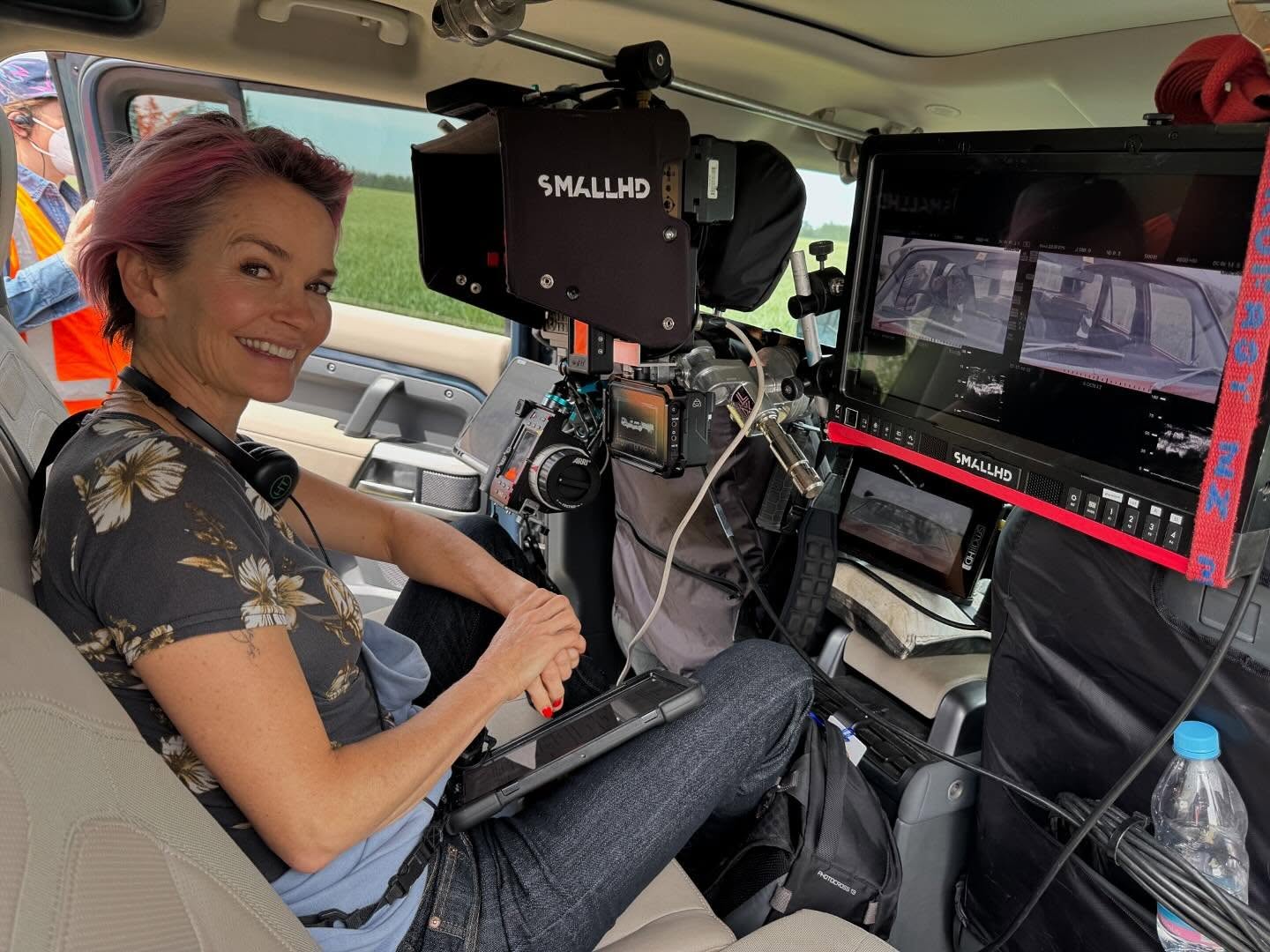
Nat Boltt on the set of HOLY DAYS.
The story blends irreverence with heart, exploring belief, connection, and renewal later in life. How did you maintain the comedic energy while still honouring the story’s spiritual and grief‑centered themes?
Firstly, thank you for this incredible compliment! I’d say that the film reflects my deep connection with the author, Dame Joy Cowley. Joy is a bit of an angel! She has an otherworldly quality, based on her own beliefs and her near-death experience, where she ‘met her maker’ and was assured that all would be well and that she should return to her life and live it with joy. She really has lived up to her name! I think I’m the irreverent one. People who know me and have seen the film have told me how they can see the ‘Nat Boltt’ in HOLY DAYS. A little crazy, quite wild, a touch silly, but also serious and heart-broken at times. I maintained the comedic energy, by maintaining my love for the story and the characters, whilst also being aware of pacing as a writer. I know when comedy is needed to relieve the tension, or when the comedy will land best, when you least expect it! So it’s a carefully crafted story, I guess. It took years of development to get it right on paper and every day at every stage of the production and postproduction, it was in danger of being derailed. But I’m happy to hear that the humour and the heart survived in the right proportions.
Both Joy and I are both very much in touch with our inner child. We believe in healing through friendship. And that a good story, told well, can change the world. There is so much bad news in the world right now and I believe that the antidote is to connect with your community, focus on the good stuff and manifest something much better together. If we keep watching dark content on screens, that’s what our world becomes. If we favour the positive, then that’s what enters our lives. It’s why I encourage people to watch HOLY DAYS at the theatre, together, with friends. To laugh and cry together. It’s so healing.
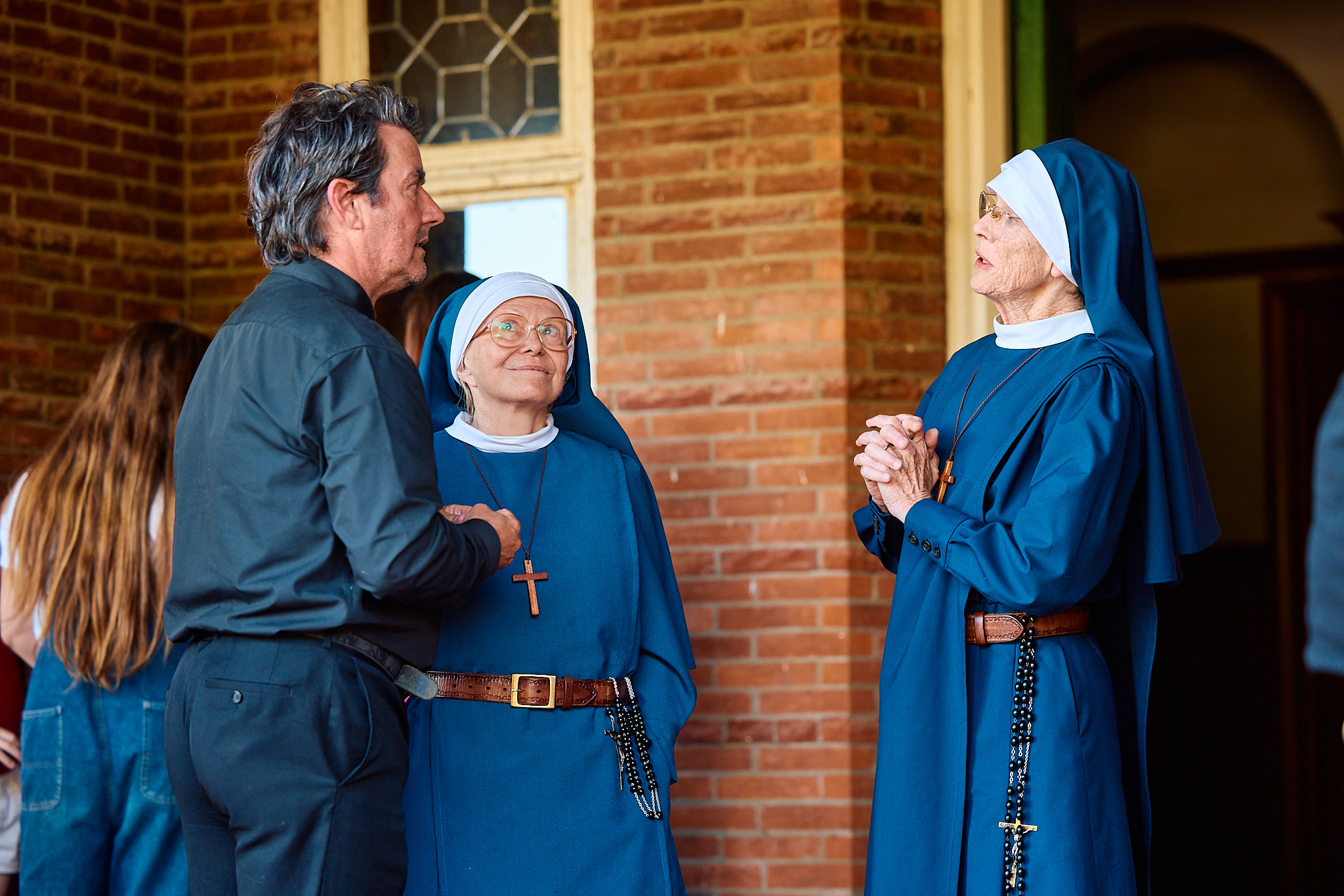
HOLY DAYS has already gained momentum on the festival circuit, including TIFF Industry Selects and its world premiere at the Santa Barbara International Film Festival. What has the early industry response meant to you, and what do you hope audiences will connect with most?
It has been so thrilling to see this film find its audience and its love so quickly. HOLY DAYS is currently number 1 at the domestic box office and number 5 at the international box office in N.Z. It beat SCREAM 7 and ELVIS: IN CONCERT this week! I had always wanted the audience to ‘dance out of the theatre’—to leave with a spring in their step, having gone on an incredible journey—just like I did as a kid, thanks to my absolute favourites like THE GOONIES, E.T., STAND BY ME, THE MUPPETS movies, THE DARK CRYSTAL, the INDIANA JONES movies. I always thought I was one of those guys! It was only later in life that I realised none of them were women. So to transfer that kind of wild adventure onto the most unlikely of female characters and then have audiences love it and run with it, after a decade of development when I thought many times that this dream would never be realised… it’s an almost indescribable joy and triumph. I hope that audiences come away feeling like the good things still matter in the world: friendship, laughter, hope, forgiveness…. and, of course, dancing. Lots of dancing.