Co-presented by DigiBC and the Vancouver International Film Festival (VIFF), the 2025 edition ran from October 3–12, inviting attendees to reflect on our connection to land, history, and human rights. This year’s theme confronted pressing global issues, from authoritarianism to AI ethics, through the lens of cutting-edge technology and creative expression.
The expanded showcase featured over 30 groundbreaking projects, including XR installations, AI-generated art, interactive performances, speculative futures, and playful digital worlds. Visitors engaged with works that emphasized healing over extraction, connection over isolation, and human agency over algorithmic control.
To gain a deeper insight into this year’s journey, we spoke with Debi Wong, co-executive producer of Signals. An award-winning XR producer, creative director, and multidisciplinary artist, Debi is also the Founder and Artistic Director of re:Opera in Vancouver. Her acclaimed projects include The Dark (CIMA Bold Award Winner, SXSW XR Selection) and Live From The Underworld (Aurea XR Award). Most recently, she performed at TED 2023 as the Solar Ambassador in K Allado McDowell’s AI opera. She was named one of the world’s 100 most influential experiential designers by XP Land’s XLIST. Debi spoke to us about the inspiration behind Signals, her impressive career trajectory, personal connection with music and creative technology, the themes approached in Signals 2025, and more.

Signals 2025. Image credit: Jess Mac Photography.
Q&A with Debi Wong
Signals is a true hub for immersive storytelling in Canada. What inspired its creation, and how has the expo evolved since its early days?
Signals was co-founded by Loc Dao, Executive Director of DigiBC and Kyle Fostner, Executive Director of VIFF. At the time of its co-founding, VIFF was presenting a branch of programming called VIFF Immersed which featured a lot of early XR content. It was really exciting to see that kind of programming in Vancouver, but at the same time, Kyle was interested in pushing the boundaries of what it could be. He approached Loc with the idea to evolve VIFF Immersed and the two of them hosted a think tank with artists, makers and arts leaders from different areas of the creative industries. We spent a day together dreaming and prototyping ideas for what would become the first iteration of Signals Creative Tech Expo in 2022.
Every year, Signals evolves and changes and grows and I think it has a lot to do with the venues we have inhabited and also the artists that we engage with. One of the things that we try to do differently at Signals, is that we look for interesting storytellers and artists first and we look at their works and try to work with them to create immersive and interactive experiences. Everything you see at Signals is usually tailored for Signals or presented in a unique way. It feels really special in that way. We now have a permanent venue at the Centre For Digital Media which has really opened things up for us. We can play with the space throughout the year and also test out new ideas and we sort of keep playing, testing, dreaming until its go time and building starts for the exhibition.
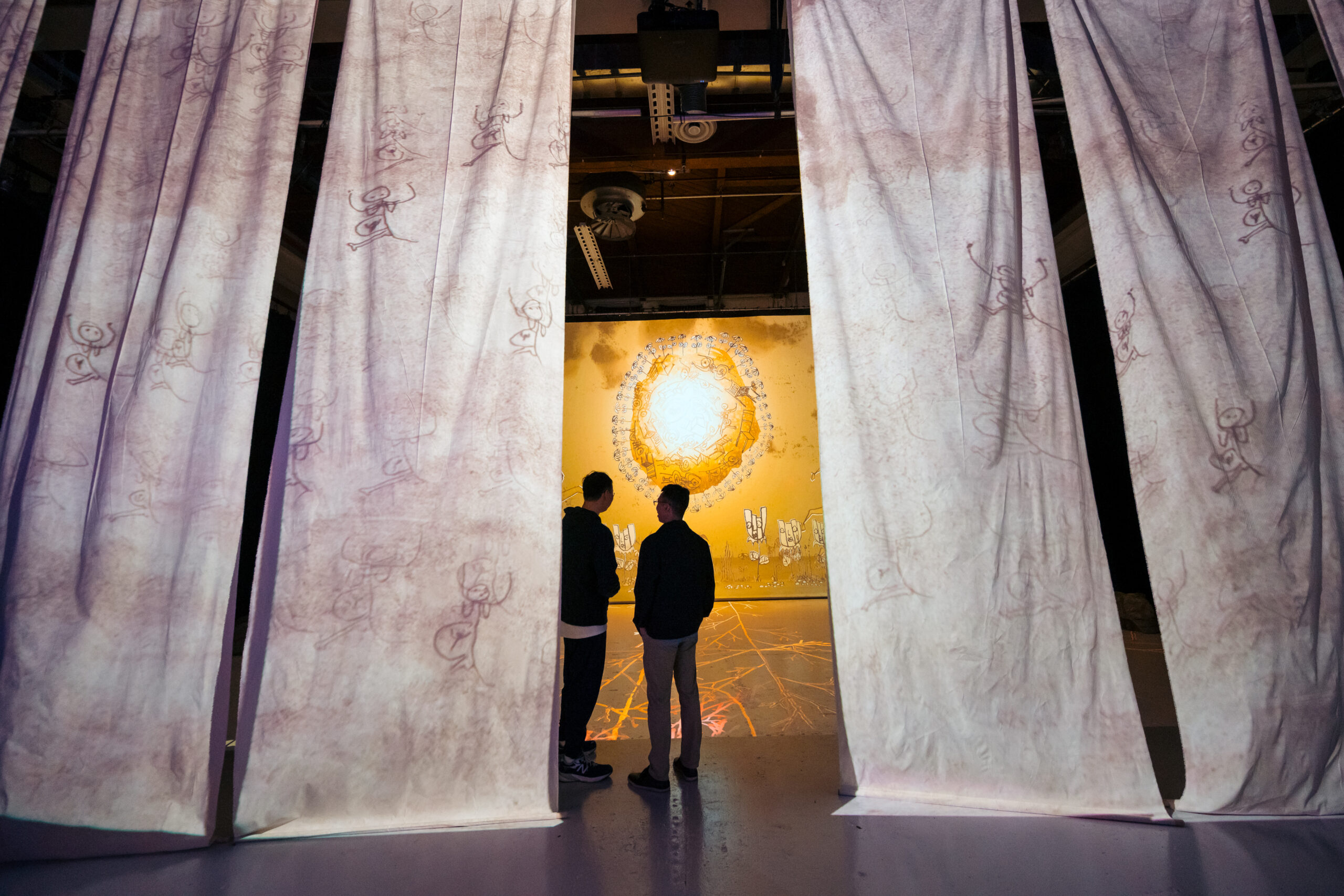
SheManShe, Signals 2025. Image credit: Jess Mac Photography.
Your journey from opera to immersive tech is remarkable. What personal experiences or turning points led you to co-create Signals and champion this kind of interdisciplinary storytelling?
I love this question because on paper my journey seems extremely random but to me it felt very natural. I have always been a super creative person and from a young age I was obsessed with music and singing. I started music lessons when I was 3 years old and even though I have a doctorate now, I still take music lessons in some form. It’s just a part of who I am. The other thing that I have loved since I was a child, was video games and in particular The Legend of Zelda games and The Secret World of Mana. These felt like really formational games for me when I was a child because they felt like I could be inside of fantasy worlds and live out stories in a way that I couldn’t access through reading (I was and am still an avid fantasy reader though!) or through other media like film and television. I think I also loved music because it is naturally immersive as well and when I started studying theatrical and operatic music, I didn’t necessarily fall in love with the operatic form, but rather the way opera was made – in an interdisciplinary way, and with the goal of immersing audiences in wild, fantastical stories. Just like in video games. When I shifted my career from being a fulltime classical singer, to a creative producer, I finally had the opportunities to try experimenting with these two forms – opera and video games – that I love and that have shaped who I am. These worlds have always co-existed within me and it has been a really interesting experience bringing them to life on the stages and exhibitions I have the honour of curating. When people come to my performances, I hope they feel that sense of “gaming” and “fun” and when people come to Signals, I hope they feel like it is dramatic, or operatic even.

Signals 2025. Image credit: Jess Mac Photography.
This year’s theme explores our connection to land, history, and human rights. How did these themes influence your curatorial approach for the 2025 exhibition?
These themes came out of the co-curation and the discussion between myself, Loc Dao and Loretta Todd. There were two really cornerstone pieces in Signals this year which were both envisioned, curated and led by Loretta Todd: SheManShe by Zachery C. Longboy and Thunderbird Dreams: Imagining Good Futures by the IM4 Indigenous Media Lab. Both works are grounded in Indigenous voices and the personal stories of indigenous artists. These stories are grounded in the lands the diverse artists come from from across Turtle Island. Zachery’s work, SheManShe, is about deep belonging and in transforming it into an immersive work, the audiences were able to all belong inside Zachery’s world. All the other works in the exhibit were selected to be a part of this conversation about centering Indigenous rights and sovereignty, fostering a sense of belonging in a divisive world, and what we can learn from our histories and stories that we pass on.
What do you hope audiences take away from their experience at Signals 2025?
I really hope that audiences come to Signals and leave with a deep impression of some of the stories that are being told in these very unique forms. Immersive Storytelling allows audiences to feel and embody the stories differently than other mediums so I hope people feel like they are carrying new stories in their bones and that they were a part of the storytelling as opposed to simply witnesses. I also hope that audiences were able to come into conversation with worldviews that are different from their own and feel a sense of shared humanity.
Looking ahead, what future possibilities excite you most in the realm of immersive storytelling and creative technology?
I am really excited to bring more performance and location based storytelling to Signals. One of our inspirations has always been Punchdrunk’s Sleep No More. We are also inspired by TeamLabs in Japan. Now that we have four years under our belts, I think it’s time to start pushing our comfort zones again. I can’t announce anything yet, but we do have some ideas for our five year anniversary in 2026 to shake things up again.
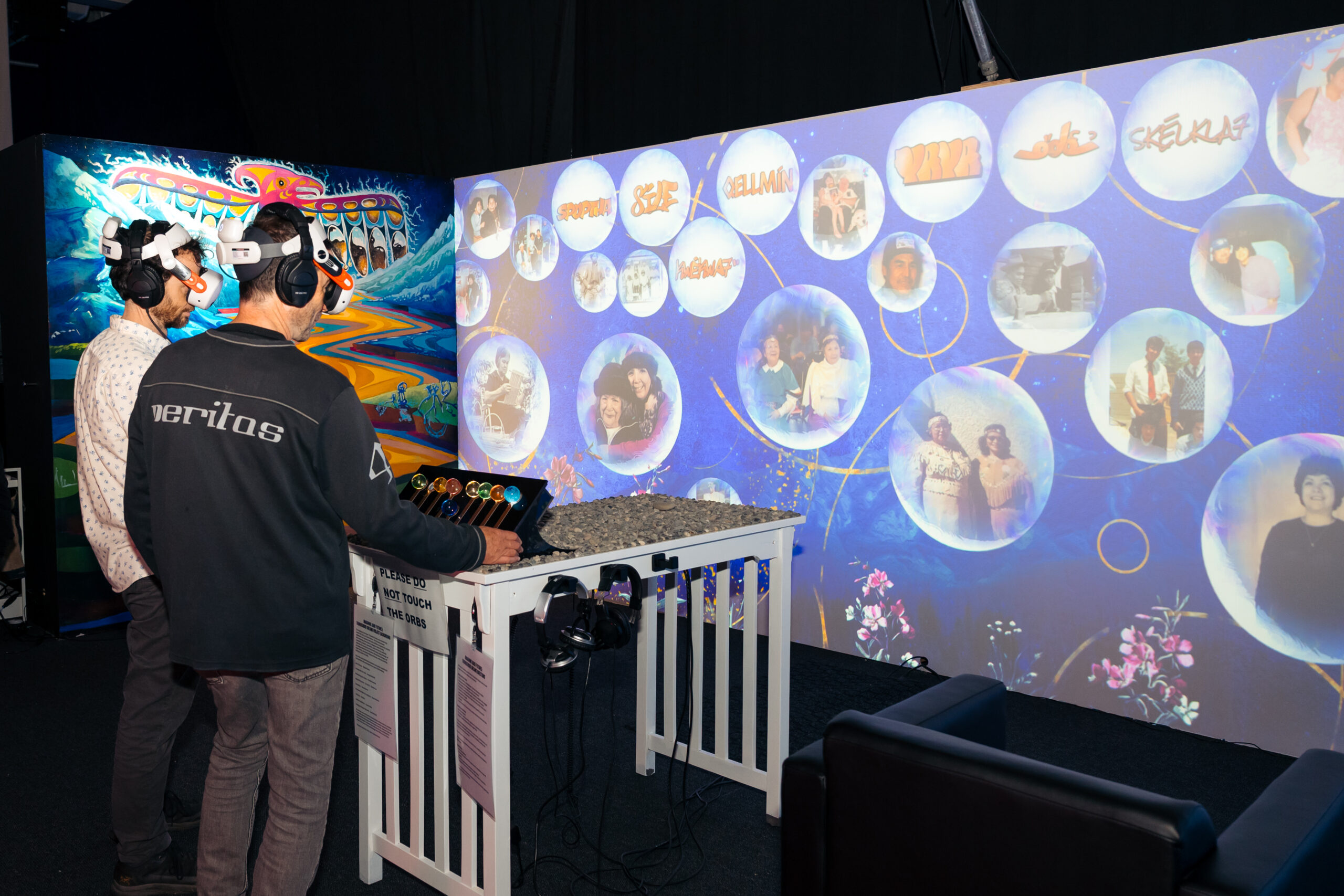
Thunderbird Dreams: Imagining Good Futures, Signals 2025. Image credit: Jess Mac Photography.
What advice would you give to emerging artists who want to work at the intersection of art and technology?
It’s probably not as difficult or impossible as you think, so you might as well start and give it a try. Vancouver has such a great creative tech sector. When I was starting out, I wanted to learn about motion capture so I googled “motion capture studios” and came across The Sawmill run by Derrick Carter. I cold called him and was delighted that he was super open to chatting about my wild idea to make a VR, interactive opera. Seven years later, I am still working with some of the people I met through Derrick at the Sawmill. I think when we have wild ideas or we are trying new things, we easily come up with a thousand reasons why we shouldn’t do something or why we shouldn’t try or why we shouldn’t just send that email or make that phone call. Once you get over that (and don’t get me wrong, that’s a big barrier!), I think folks would be surprised and delighted and the amazing things that can happen and the people they will meet – especially in Vancouver.
Learn more about Signals on the DigiBC website.
Cover image by Jess Mac Photography.