To many readers, short stories have a concise, accessible format, particularly fitting for the hustle and bustle that characterizes the modern world. No matter how busy you are, a short story can always be squeezed into your day, whether to unwind, pass the time, or have an emotional experience. Short stories are a catalyst for discoveries of all sorts. They can be a gateway into reading for those who don’t know where to start, as they are less of a time commitment than fully fledged novels and their page count makes them less intimidating. They can also be particularly useful for readers still defining their taste in books, trying to dip their toes into a new genre, time period, style, or author.
Many writers cut their teeth by debuting short stories in magazines, or publishing a collection as their first book before moving onto long-form. Short stories become their playgrounds for experimentation, and their shortest work can often be the best places to grasp the essence of their style. But short stories should not be looked at as merely bite-sized novels or starting points, and their accessibility does not make them lesser than a novel.
Short stories set their own rules and rhythm, packing a punch within their short page count. Collections follow connecting threads from story to story, brief stops in the lives of others, open doors to new experiences, and transport you into self-contained universes where everything has meaning. There is no space for filler. Punctuation, word choices, and sentence structures each serve a purpose and imbue the story with depth and detail. In these deliberate choices, the world of the story is as much form as it is content, directing the reader in how to experience their narrative threads.
The order of stories is an art form in itself, meant to stress a point, follow a thread, direct the reader’s attention to a certain connecting idea or common theme, and even shape the emotional experience of the collection. Anthologies likewise carve the reader’s path into discovering the breadth of a genre, the voices of a set of writers united by a common thread, or simply to enter them into the zeitgeist of current literary trends. Ambitious by nature, collections and anthologies have a different kind of structure to the traditional novel, and burst with uniqueness not only due to the stories contained in them, but also thanks to their editors.
Short stories don’t exist in isolation. They live in bookstores and libraries, circulate through magazines and festivals, and are shaped by the communities that read, edit, publish, and champion them. Whether you’re a devoted reader, a curious newcomer, or a writer finding your voice, there are countless ways to engage with short fiction close to home.
How can you participate?
Engaging with short stories means reading widely,
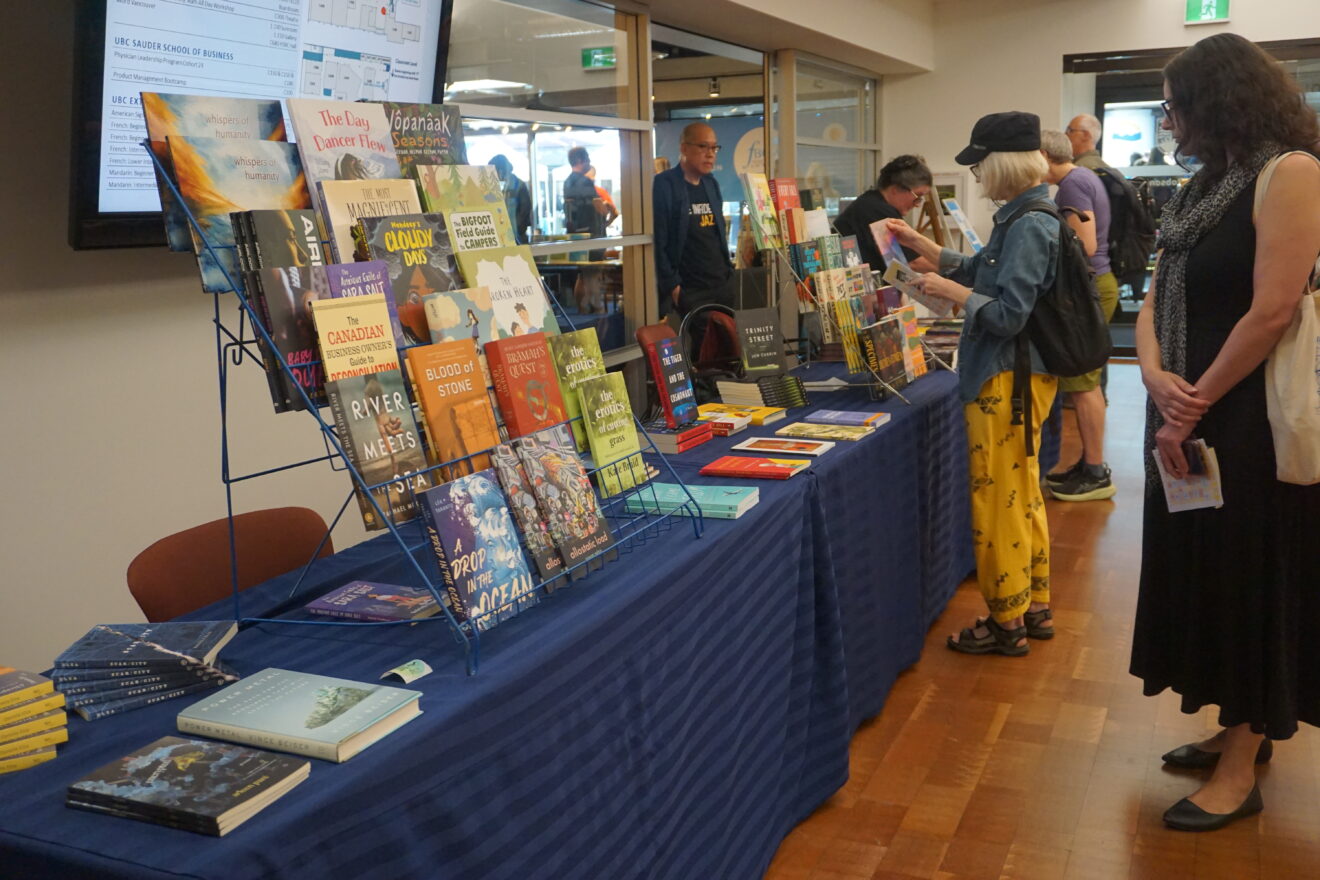
Browse your local indie bookstore and support a community hub that keeps stories, ideas, and culture flourishing close to home. Check out their staff picks in store or online, which frequently feature selections of local authors.
To discover one-of-a-kind writing in the many magazines published in our province, check out some of the B.C. publications featuring short stories from local and international authors. PRISM international, EVENT, Room Magazine, subTerrain, Ricepaper Magazine, Portal Magazine, and Geist are just a few of the local magazines that publish extraordinary short-form writing.
Browse some of the curated reading lists from ReadLocalBC, such as Books You Can Devour in One Sitting, or Collection that Delight, Best Enjoyed in the Sun.
And, as always, support your local library and browse the stacks in your search for your next read. Their knowledgeable librarians are always happy to make a recommendation.
Attend an event
The Flash of Fireflies: Writing the Short Story | May 19, Vancouver Public Library – Central Branch *FREE
Listen in on this panel featuring four talented fiction writers, Alix Ohlin, Andrea Routley, Jacquelyn Zong-Li Ross, and Shashi Bhat, in conversation with local author Jen Currin about the art and craft of this wily and often misunderstood genre.
Submit your work
Vancouver Writers Fest Youth Writing Contest (*deadline May 31)
CBC Short Story Prize (*opening September 1)
Geist Magazine’s Poltergeist Story Contest and Postcard Story Contest
Room Magazine’s Creative Nonfiction Contest (*open until submission cap is reached)
Montreal Fiction Prize (Canada-wide)
…and more! Check out this list from the Canadian Authors Association.
Don’t know where to start?
Here are a few selections of acclaimed short story collections to spark your interest:
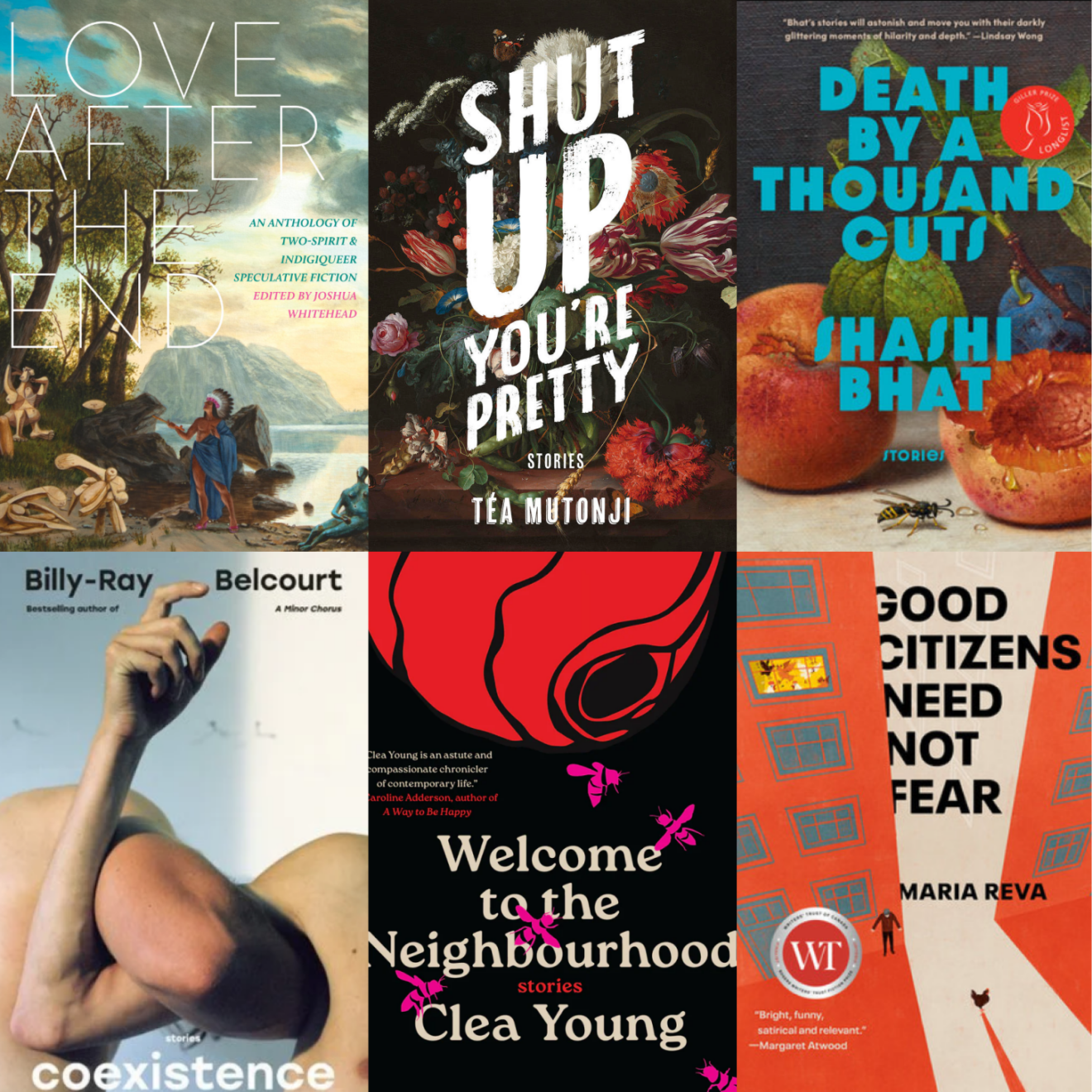
Welcome to the Neighbourhood by Clea Young
Distinctly rooted in the Pacific Northwest, Young’s characters make their marks and take their missteps on the beaches, in the mountains and neighbourhoods in and around Vancouver, BC. A couple spontaneously invite their new neighbours to dinner and the night takes a menacing turn. A widow seeks solace and revenge on the mountain bike trails behind her home. And an overwhelmed single mother moves into a housing cooperative the same summer two teenage boys are on the run, wanted for murder.
Coexistence: Stories by Billy Ray Belcourt
A collection of intersecting stories about Indigenous love and loneliness from one of contemporary literature’s most boundless minds. Across the prairies and Canada’s west coast, on reserves and university campuses, at literary festivals and existential crossroads, the characters in Coexistence are searching for connection. They’re learning to live with and understand one another, to see beauty and terror side by side, and to accept that the past, present, and future can inhabit a single moment.
Death by a Thousand Cuts: Stories by Shashi Bhat
A breathtaking and sharply funny collection about the everyday trials and impossible expectations that come with being a woman, winner of the 2025 Ethel Wilson Fiction Prize among many other accolades. With honesty, tenderness, and a skewering wit, these stories boldly wrestle with rage, longing, illness, and bodily autonomy, and their inescapable impacts on a woman’s relationships with others and with herself.
Shut Up You’re Pretty by Téa Mutonji
In Tea Mutonji’s disarming debut story collection, a woman contemplates her Congolese traditions during a family wedding, a teenage girl looks for happiness inside a pack of cigarettes, a mother reconnects with her daughter through their shared interest in fish, and a young woman decides to shave her head in the waiting room of an abortion clinic. These punchy, sharply observed stories blur the lines between longing and choosing, exploring the narrator’s experience as an involuntary one. Tinged with pathos and humour, they interrogate the moments in which femininity, womanness, and identity are not only questioned but also imposed.
Good Citizens Need Not Fear by Maria Reva
This brilliant and bitingly funny novel-in-stories, set in and around a single crumbling apartment building in Soviet-era Ukraine, heralds the arrival of a major new talent. A cast of unforgettable characters—citizens of the small industrial town of Kirovka—populate Maria Reva’s ingeniously entwined tales that span the chaotic years leading up to and immediately following the fall of the Soviet Union in 1989. Weaving the strands of the narrative together is an unforgettable, chameleon-like young woman named Zaya: an orphan turned beauty-pageant crasher who survives the extraordinary circumstances of her childhood through a compelling combination of ferocity, intelligence, stubbornness and wit.
Love After the End edited by Joshua Whitehead
A bold and breathtaking anthology of queer Indigenous speculative fiction, edited by the author of Jonny Appleseed. This exciting and groundbreaking fiction collection showcases a number of new and emerging 2SQ (Two-Spirit and queer) Indigenous writers from across Turtle Island. These visionary authors show how queer Indigenous communities can bloom and thrive through utopian narratives that detail the vivacity and strength of 2SQness throughout its plight in the maw of settler colonialism’s histories.